 LandOffer
Job search
What Data Do AI Job Search Tools Use? A Privacy Checklist for Applicants
Inventory what you supply, what the service processes and shares, and what each removal action covers before choosing the smallest useful input.
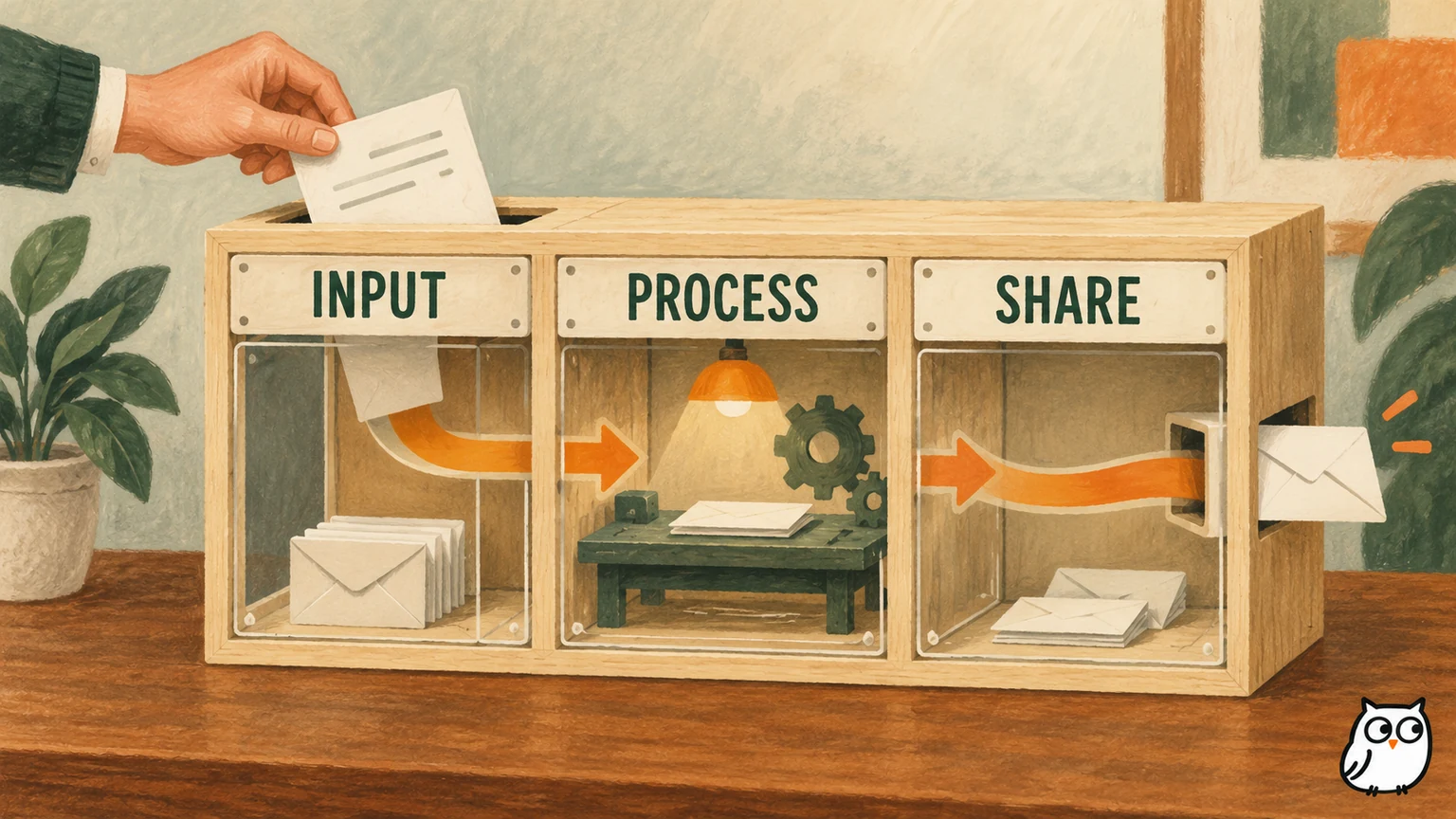
An AI job-search tool may receive more than your resume. It can also process saved descriptions, application answers, profile details, usage signals and data from optional account connections. Before using a feature, identify its input, processing purpose, sharing routes and removal controls. Then choose the smallest set of information that can complete your task.
You can browse recently posted jobs on LandOffer while keeping application evidence in your existing setup. LandOffer publishes this guide and offers job-search tools. This is a reading checklist for specific public policies, not a security audit or a universal safety ranking. Keeping a familiar tool, declining an optional connection or writing manually can be reasonable choices.
Begin with the feature, not the product name
Check the feature separately: a resume edit, tracker import and mailbox connection can create different data flows within one product. “I use the tool” is too broad a description for a useful privacy decision. State the task first: edit one paragraph, store application history, reuse saved form answers or synchronize messages.
Then list what you would supply. A paragraph about a project may not require your phone number, street address, reference contacts or entire application history. A tracker needs enough identity to distinguish jobs, but a writing prompt may only need the relevant responsibility and evidence. Avoid sending more material simply because a large paste box makes it convenient.
Record what comes from optional integrations. Uploading a document is a deliberate transfer of that document; connecting an account can authorize continuing access within the granted permissions. Read the connection description and the service policy before deciding whether that broader access helps the task you actually have.
Finally identify who could receive the information. Processing by an AI provider, sharing a board with another person and sending an application to an employer are different events. A statement about one does not answer questions about the others.
A current three-tool policy ledger
The following is a bounded reading of official pages checked October 8, 2026. We did not create an account, upload data, inspect private settings or verify vendors' implementation. The dates are document dates; our public reading did not verify implementation or a change in account behavior.
| Tool and document date | What the policy reading establishes | What the reading does not settle |
|---|---|---|
| Teal, August 12, 2026 | Career content and optional connected-account data have distinct AI, retention and removal rules | Whether a particular account's complete removal has finished |
| Huntr, February 8, 2024 | Career/profile data, organization or board sharing and service-provider processing are described | A named AI model provider or a blanket no-training promise |
| Simplify, August 19, 2026 | Provider training restrictions differ from its own AI improvement and special data exceptions | A fixed date when every backup or provider copy disappears |
Teal's privacy policy covers resume and career content, saved descriptions, notes and applications, as well as optional connections. It describes third-party AI processing and improvement using anonymized or aggregated career information. Its Google Workspace restriction concerns generalized AI training with that connected data; it should not be broadened into “no career data is used for any improvement.” The policy also distinguishes stopping future Google access from removing information already imported or derived.
Teal's terms state a narrower restriction concerning identifiable career documents and general-purpose models for other customers. They describe exporting content before deletion and say active-system deletion or anonymization can take up to 30 days, with retained information for specified purposes. Read the terms alongside the privacy policy rather than compressing these qualifications into an unqualified no-training or instant-erasure claim.
Huntr's current served policy still displays February 8, 2024 as its modification date. It describes career/profile information, AI-related service providers, board sharing and organization-related use. Board sharing exposes the board's data to the people with whom you share it. Retention is tied to its stated purposes; organization-managed data can require contacting the organization. This document does not establish a universal 30-day removal deadline or identify a specific model provider.
Simplify's privacy policy distinguishes contractual restrictions on third-party provider training from Simplify's own model development and improvement. It gives particular treatment to connected email, extension information and self-identification data. It also describes selected candidate matching for recruiters without a separate application, while saved answers and self-identification information have different sharing boundaries. Active-account removal does not mean backups, logs or legally retained information all vanish immediately.
Use these distinctions to make a feature-specific decision and identify the next question. The policy reading does not establish a universal safety ranking.
Ask what “training” excludes and what it leaves open
Treat a no-training statement as a scoped claim. Which party does it cover: the tool itself, its AI provider or both? Which data: identifiable documents, de-identified signals, connected messages or all inputs? Which purpose: generalized model training, feature-specific improvement, evaluation or generating the result you requested?
Record the party, data category and purpose beside any no-training statement. “The provider is restricted from training its own general models on this input” is different from “the product never uses information to improve its own systems.” If the policy does not answer a question, record it as unresolved. Do not fill a blank with an assumption drawn from another vendor's terms.
You can retain your current workflow while asking about an unresolved feature boundary. That is a task decision, not a finding that a policy violates a law. This guide does not assess regulatory compliance or promise that removing your name makes a detailed work story anonymous.
A complete minimum-input decision
Mira is preparing an application to fictional Juniper Works role JW-846. She wants help shortening a paragraph about a documentation project. The employer and her materials here are authored teaching data. Her source document includes her email, phone number, a colleague's name, an internal project URL and notes about an unrelated application.
She first defines the useful task: shorten her own contribution and preserve its limits. The AI editor does not need the entire resume to do that. Her completed input review is:
| Material | Decision | Reason |
|---|---|---|
| Her paragraph and relevant public role responsibility | Include | Needed to make the edit relevant |
| Email and phone | Omit from this editing input | Not needed to shorten the paragraph |
| Colleague's name | Replace with “reviewer” | Team role matters; personal identity does not |
| Internal URL and proprietary details | Omit | The edit can use a permitted high-level description |
| Unrelated application notes | Keep in her private record | Outside this task |
| Optional mailbox connection | Decline for this exercise | One paragraph does not require message access |
Her finished input reads: “In a documentation project, I reorganized troubleshooting steps and added a short reproduction checklist. A reviewer checked the revised instructions. I contributed the documentation; I did not own the underlying product fix. Shorten this for the role's clear-documentation responsibility without adding metrics, tools or outcomes.”
That is a complete useful input. It carries the relevant action, review and ownership boundary while omitting unrelated data. It is not guaranteed anonymous: context can still identify people or work. Mira must have permission to share the remaining description and should use a broader description if the project itself is confidential.
Her decision record says: “Use a permitted, reduced paragraph input; no integration for this task; read the chosen service's current policy before use; keep the original and final text locally.” She has not concluded that all three tools have identical controls. She has chosen a smaller task that requires less data.

A complete removal decision and clarification request
Deleting one draft, disconnecting an integration, deactivating an account and deleting an account can have different effects. Before taking an irreversible action, export the information you want to keep and read the current instructions. Check whether subscription management is a separate task rather than assuming that every data control handles billing.
Simplify's account guide distinguishes deactivation, which preserves data and settings for reactivation, from permanent account deletion. The guide describes immediate account deletion and up to 48 hours for mailing-list changes. Its broad removal language should be read with the privacy policy's retention exceptions; it is not proof of instantaneous erasure from every system.
Mira's finished removal decision log is specific even though she has not executed it:
| Situation | Next action | Completion evidence to keep |
|---|---|---|
| Wants her own application history after leaving | Export first and inspect the saved copy | Readable records and documents she intended to retain |
| Wants to stop future optional account access | Use the documented disconnect or revoke-access route | Connection state; separately assess already imported data |
| Wants a temporary break with later return | Consider the documented deactivation option | Account state and stated data-preservation effect |
| Wants permanent account removal | Use that service's current account-deletion or request route | Confirmation and stated retention scope, not just inability to sign in |
| Data is managed through an organization | Identify the responsible organization and request path | Which controller or service received the request |
The log records Mira's completed choice of removal routes, not a claim that deletion happened. It names actions and the evidence needed to close each task. An account login failing is insufficient proof that every retained copy is gone. A disconnected mailbox is insufficient proof that old imports were deleted.
Mira also finishes this unsent clarification request for Teal, whose current documents she has read:
Hello, I am reviewing Teal's August 12, 2026 privacy policy and terms before deciding whether to connect Google and use a career-writing feature. My intended input is a reduced paragraph about my own documentation contribution. Could you clarify which parts of that input may support Teal's own model improvement and which are sent to third-party AI processors? If I later disconnect Google, which previously imported or derived information would remain? Before account deletion, I would export the content I need. Please clarify the active-system deletion or anonymization window and the categories that may remain under the policy's retention exceptions. I do not need to send my resume to ask these questions. Thank you, Mira.
The finished note identifies the documents, task and unresolved boundaries without disclosing the underlying career history. It is an authored teaching asset and has not been sent. The questions do not claim an account action succeeded.
For an unresolved question, Mira can ask the service: “For the feature I use, which input categories go to AI processors, which may support your own model improvement, and what remains after account deletion?” Add the exact feature and document date. Do not send a full resume merely to ask how the service would handle it.
Separate writing inputs from application recipients
Mira's paragraph-editing decision does not settle the data requirements of an employer application. The employer may ask for contact information, work history or eligibility answers that she deliberately omitted from the editing input. Read those instructions at the destination and provide accurate answers through the intended application route.
Keep a recipient note when a tool sends materials on your behalf: which employer, which role, which document version and which answers were sent. Removing a draft from the writing tool does not demonstrate that an employer's received application was withdrawn or deleted. If you need to address employer-held information, identify that recipient's own process instead of relying on the editor's account controls.
This distinction also helps with sharing a tracker. A private note about a role may contain information unrelated to the collaborator's task. Before sharing, inspect the actual material to be exposed and the documented sharing scope. Use a smaller summary when it can accomplish the same purpose.
Keep useful uncertainty in the record
A policy can name categories of providers without naming every model or infrastructure vendor. It can specify a general retention purpose without giving a fixed deletion interval for all copies. Record those limits rather than treating a polished summary as more precise than its source.
Keep a short ledger with the checked date, policy URL, feature, input categories and open questions. Recheck it when you enable a new integration, start sharing a board or switch to a feature that submits material to employers. Those changes can matter more than switching from one editor to another for the same reduced input.
Do not confuse a publisher's recommendation with an independent assurance. Public policies are statements about intended handling, and this review did not test them. Your decision can still be concrete: reduce input, decline unnecessary access, understand sharing, export what you need and follow the correct removal route.
If your current tool already supports that workflow and you understand its documented boundaries, keep it. If you prefer to write manually, the same minimum-input principle helps organize your private notes. After deciding what information your next task requires, you can browse recently posted jobs on LandOffer and review the data requirements of the employer's actual application separately.